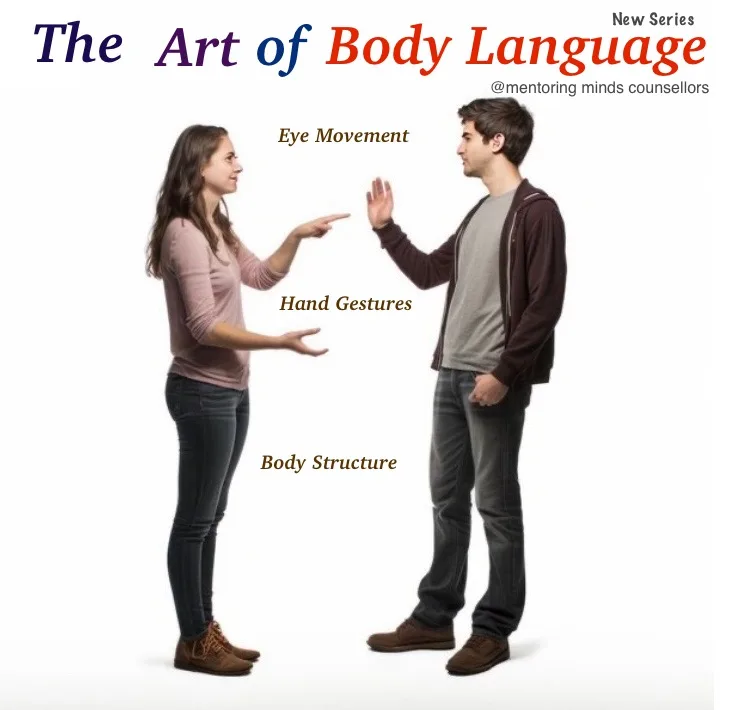
Body language is an intricate, often subconscious way we communicate with one another. It encompasses a wide range of non-verbal cues, from eye movements to hand gestures and overall body posture. Understanding these elements can not only improve our personal interactions but also offer insight into others’ thoughts and feelings.
Our Eye Movement: Our Windows to the Soul
Our eyes are incredibly expressive and reveal much about our internal states. Eye contact, or the lack thereof, can convey a range of emotions and intentions. For instance, sustained eye contact often signals confidence, honesty, and interest. In contrast, avoiding eye contact can indicate discomfort, dishonesty, or shyness. The direction of gaze also provides clues; looking up might suggest thinking or imagining, while looking down can sometimes indicate embarrassment or submission.
Pupil dilation, too, can be revealing. When we are excited or attracted to something, our pupils tend to dilate. This automatic response can be a subtle yet powerful indicator of our true feelings.
Our Hand Gestures: Speaking Without Words
Hand gestures are another crucial component of body language. They can complement, emphasize, or even contradict what we are saying. For example, open-handed gestures are generally associated with honesty and openness, while clenched fists can signal frustration or anger.
Certain gestures, like a thumbs up or a wave, are universally recognized and can bridge communication gaps across different cultures. However, it’s important to be aware that some gestures can have different meanings depending on cultural context. For example, the “OK” sign made with the thumb and index finger can be seen as a positive gesture in many places but may be interpreted differently in other regions.
Our Body Structure: The Foundation of Non-Verbal Communication
Our overall body posture can convey a wealth of information. Standing with an open stance, shoulders back, and head held high often signals confidence and openness. Conversely, slumped shoulders or crossed arms can suggest defensiveness or insecurity.
Body language also plays a role in social dynamics. For example, mirroring someone’s posture or gestures can create a sense of rapport and understanding, as it often makes the other person feel more comfortable and validated. This unconscious mimicry helps build connections and fosters positive interactions.
The Conclusion
We at Mentoring Minds Counsellors believe that understanding the body language requires paying attention to the interplay of various elements. It’s not just about analyzing a single gesture or movement in isolation but considering the full context. For example, a person might cross their arms while leaning in and making eye contact, which could signal engagement despite the seemingly defensive gesture of arm-crossing.
By tuning into these non-verbal cues, we can enhance our communication skills, build stronger relationships, and gain a deeper understanding of others. Body language is a powerful tool that, when used thoughtfully, can enrich our interactions and provide a more nuanced view of the world around us.