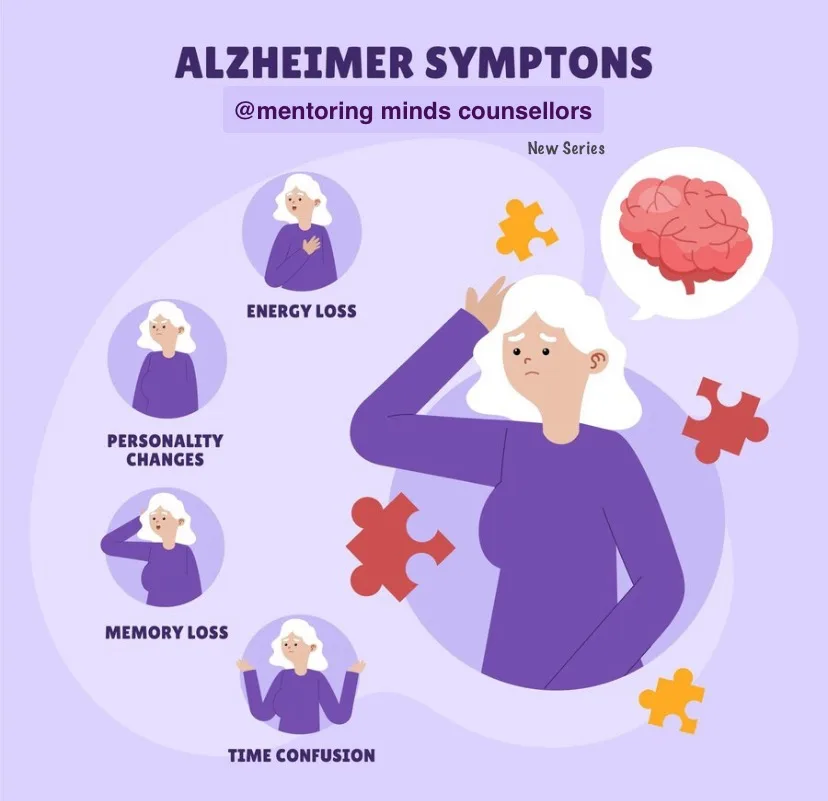
Alzheimer’s disease, a progressive neurological disorder which affects memory and cognitive functioning. It’s crucial to recognize its symptoms early for better management and quality of life.
1. Memory Loss
- Early Signs: Forgetting recent events, important dates, or repeatedly asking the same questions.
- Progression: Memory gaps extend to forgetting names of close family members or everyday objects.
2. Difficulty Planning and Problem-Solving
- Challenges: Handling bills, following recipes, or managing finances become increasingly difficult.
- Complex Tasks: Planning for events or organizing activities becomes overwhelming.
3. Confusion with Time or Place
- Disorientation: Losing track of dates, seasons, or the passage of time. Difficulty understanding where they are and how they got there.
4. Changes in Mood and Personality
- Emotional Shifts: Mood swings, withdrawal from social activities, or increased suspicion and paranoia.
- Personality Changes: Becoming more anxious, fearful, or easily upset, especially in unfamiliar situations.
5. Difficulty Completing Familiar Tasks
- Daily Activities: Trouble driving to a familiar location, managing a budget, or remembering the rules of a favorite game.
6. Language Problems
- Communication: Struggling with vocabulary, finding the right words, or following conversations.
- Writing and Speaking: Repeating themselves, calling things by the wrong name, or inventing new words.
7. Poor Judgment
- Decision-Making: Making poor choices in social situations, hygiene, or personal finances.
- Safety Concerns: Decreased ability to respond to emergency situations appropriately.
8. Withdrawal from Work or Social Activities
- Isolation: Loss of interest in hobbies, work projects, or social activities previously enjoyed.
9. Changes in Vision or Spatial Relationships
- Visual Perception: Difficulty reading, judging distances, or determining color or contrast.
10. Misplacing Items
- Item Misplacement: Putting items in unusual places, like placing keys in the fridge or shoes in the dishwasher.
Conclusion
Recognizing these symptoms early allows for timely medical intervention, potentially slowing the progression of Alzheimer’s disease and improving the quality of life for both the individual and their caregivers. We at Mentoring Minds Counsellors suggest that early detection can empower families to plan ahead and make informed decisions about caregiving and future arrangements.