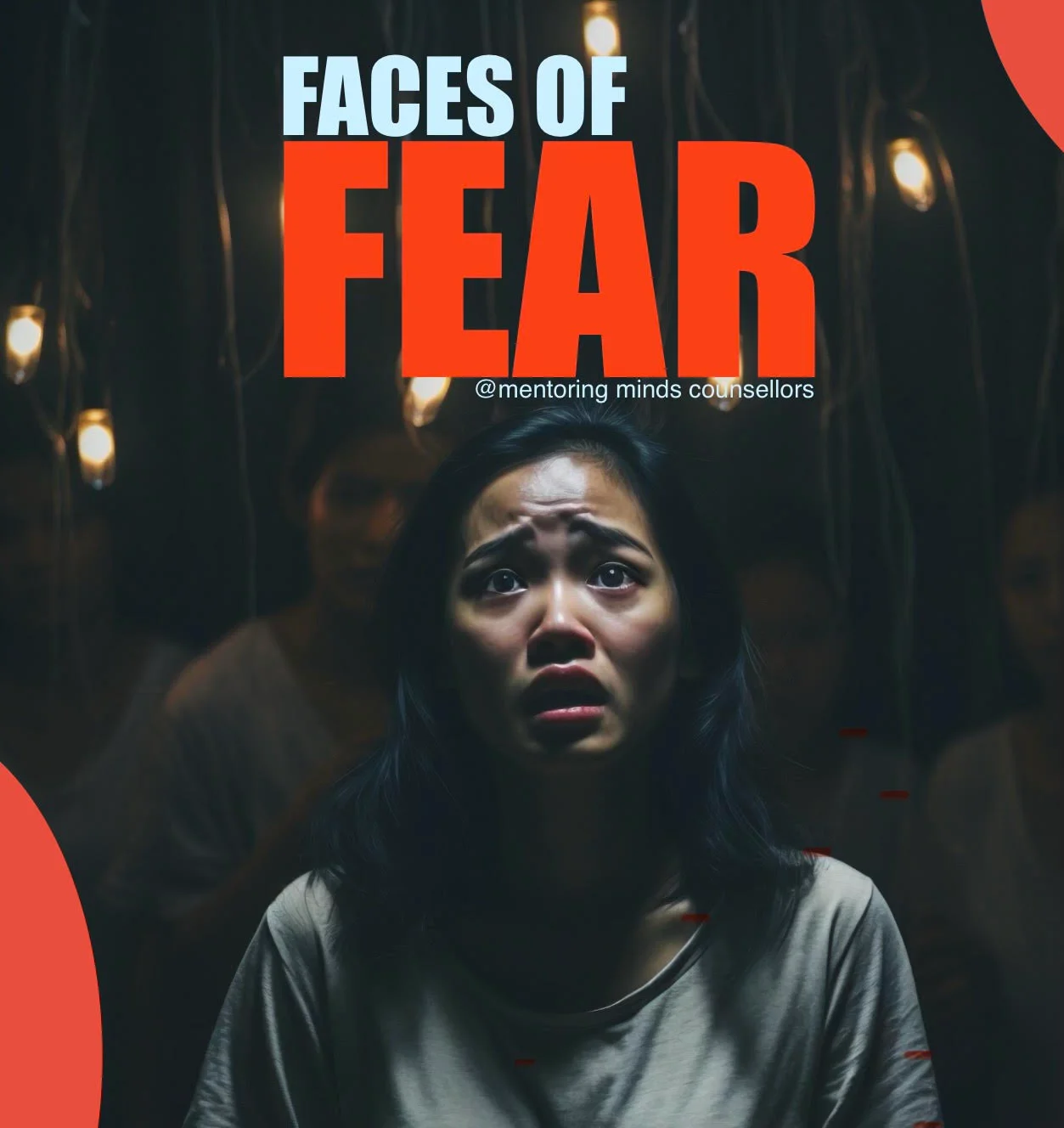
When we think of fear, we often imagine someone trembling, running away, or feeling anxious in a dangerous situation. But fear does not always look like fear.
Sometimes, it looks like anger. Sometimes, it looks like perfectionism, silence, overthinking, people-pleasing, or emotional distance. A person may appear confident on the outside while silently struggling with the fear of failure, rejection, or not being good enough.
From a psychological perspective, fear is a natural emotional response to a perceived threat. It prepares the mind and body to protect us from danger. However, sometimes our minds interpret criticism, uncertainty, rejection, or emotional vulnerability as threats, even when we are not in immediate danger.
Understanding the faces of fear helps us look beyond behaviour and ask a deeper question: What might this person be experiencing beneath the surface?
1. Fear That Looks Like Anger
Anger is sometimes a protective response to more vulnerable emotions, such as fear, shame, or insecurity.
Imagine an employee who reacts defensively whenever their manager gives feedback. The employee may not simply be angry about the feedback; they may be afraid of appearing incompetent or disappointing others.
Anger can temporarily make a person feel powerful when they feel emotionally threatened. However, it may also damage relationships and prevent honest communication.
Understanding the fear behind anger does not excuse harmful behaviour. It helps us understand the emotion while recognising the importance of accountability.
2. Fear That Looks Like Perfectionism
Some people believe they must perform exceptionally well to deserve appreciation and respect.
They repeatedly check their work, struggle to accept mistakes, and feel dissatisfied even after achieving success. Beneath their high standards may be the belief, “If I make a mistake, people will think I am not good enough.”
Psychologically, perfectionism can sometimes become a way of avoiding criticism, rejection, or shame.
Healthy growth begins when we understand that making mistakes does not make us failures. We can strive for excellence without expecting ourselves to be perfect.
3. Fear That Looks Like Overthinking
Overthinking often develops when the mind tries to gain certainty about uncertain situations.
A delayed message may lead someone to wonder whether they have upset another person. A workplace conversation may trigger fears of losing a job. The mind repeatedly examines possibilities, hoping to prevent something unpleasant from happening.
However, constant thinking does not always produce solutions. Sometimes, it simply increases anxiety.
A helpful approach is to separate facts from assumptions and ask: “What do I know, what am I imagining, and what can I actually do about it?”
Not every thought requires an answer, and not every uncertainty requires immediate resolution.
4. Fear That Looks Like Silence
Some people remain silent because they find it difficult to express their feelings, disagree with others, or ask for help.
Past experiences may have taught them that speaking up leads to criticism or conflict. As a result, silence may feel safer than honesty.
However, repeatedly suppressing feelings can create emotional distance and misunderstandings.
Learning to express oneself gradually through statements such as “I feel uncomfortable” or “I see this differently” can help build confidence and healthier relationships.
Silence is not always a sign of fear, but when it comes from feeling unsafe to speak, it deserves understanding.
5. Fear That Looks Like People-Pleasing
People-pleasing occurs when someone repeatedly prioritises others’ needs at the expense of their own.
They may struggle to say no because they fear rejection, disappointment, or conflict. Their underlying belief may be, “If I keep everyone happy, they will continue to accept me.”
Over time, this pattern can lead to exhaustion, resentment, and weakened personal boundaries.
Healthy relationships do not require us to agree with everyone. We can care for others while respecting our own needs.
Saying no to a request does not mean saying no to a person.
6. Fear That Looks Like Emotional Distance
Some people withdraw when relationships become emotionally close. They may avoid difficult conversations or struggle to express vulnerability.
For some, this distance may be connected to previous disappointments or a fear of being hurt again. Keeping others at a distance can create a temporary sense of safety, but it may also prevent meaningful connection.
Attachment theory helps explain how relationship experiences can influence our expectations of trust and closeness. However, not everyone who prefers independence is afraid of intimacy.
The goal is to recognise whether distance reflects a genuine preference or a protective response that no longer serves us.
7. Fear That Looks Like Procrastination
Procrastination is not always laziness. Sometimes, it is a way of avoiding uncomfortable emotions.
A person may delay an important task because they fear failure, criticism, or making a mistake. Avoiding the task provides temporary relief, but the approaching deadline often increases anxiety.
A useful strategy is to break the task into smaller, manageable steps.
Instead of waiting until you feel completely confident, begin with one small action. Confidence often develops through experience rather than appearing before we start.
8. Fear That Looks Like Excessive Independence
Some people rarely ask for help, even when they are struggling.
They may believe that depending on others makes them weak or vulnerable. This belief can develop through experiences of disappointment, criticism, or having to manage difficulties alone.
Although independence is valuable, refusing all support can lead to unnecessary emotional exhaustion.
Healthy independence means being able to manage your responsibilities while recognising when help, cooperation, or emotional support would be beneficial.
Asking for help is not weakness; it is an acknowledgement of being human.
9. Fear That Looks Like Low Self-Worth
One of the deepest fears is the belief that we are not enough.
A person may constantly compare themselves with others, dismiss compliments, or feel that they must continually prove their worth.
When self-worth depends entirely on achievement or approval, even a small mistake can feel like a personal failure.
A healthier approach is to distinguish between making a mistake and being a mistake. We can acknowledge our weaknesses, take responsibility for our actions, and continue improving without attacking our identity.
Our achievements contribute to our lives, but they do not define our entire value as human beings.
10. Understanding and Managing Fear
Fear cannot always be eliminated, nor should it be. Sometimes, it alerts us to genuine danger. The goal is to understand when fear is protecting us and when it is unnecessarily restricting our lives.
We can begin by following five simple steps:
Recognise the emotion: Identify whether you feel afraid, angry, ashamed, rejected, or uncertain.
Understand the trigger: Ask what situation or thought created the emotional response.
Separate facts from assumptions: Examine whether the feared outcome is supported by evidence.
Choose a healthier response: Instead of reacting automatically, pause and consider what action would help.
Seek support when needed: If fear consistently interferes with work, relationships, sleep, or daily life, a qualified mental health professional can help.
The purpose is not to become fearless. It is to develop the ability to make thoughtful decisions even when fear is present.
Conclusion: Beyond the Faces of Fear
We at Mentoring Minds Counsellors understand that fear wears many faces. It may appear as anger, perfectionism, silence, overthinking, people-pleasing, or emotional distance. Sometimes, it hides behind success, confidence, and constant busyness.
However, we must remember that behaviour does not have one universal explanation. We cannot know what someone is experiencing simply by observing their actions. Understanding requires communication, context, and empathy.
When we recognise fear in ourselves, we can respond with curiosity rather than shame. When we encounter difficult behaviour in others, we can seek understanding without abandoning our boundaries.
Perhaps courage is not the absence of fear. Perhaps it is the willingness to understand our fears without allowing them to control every decision we make.
Fear may be a part of your story, but it does not have to write every chapter of your life.