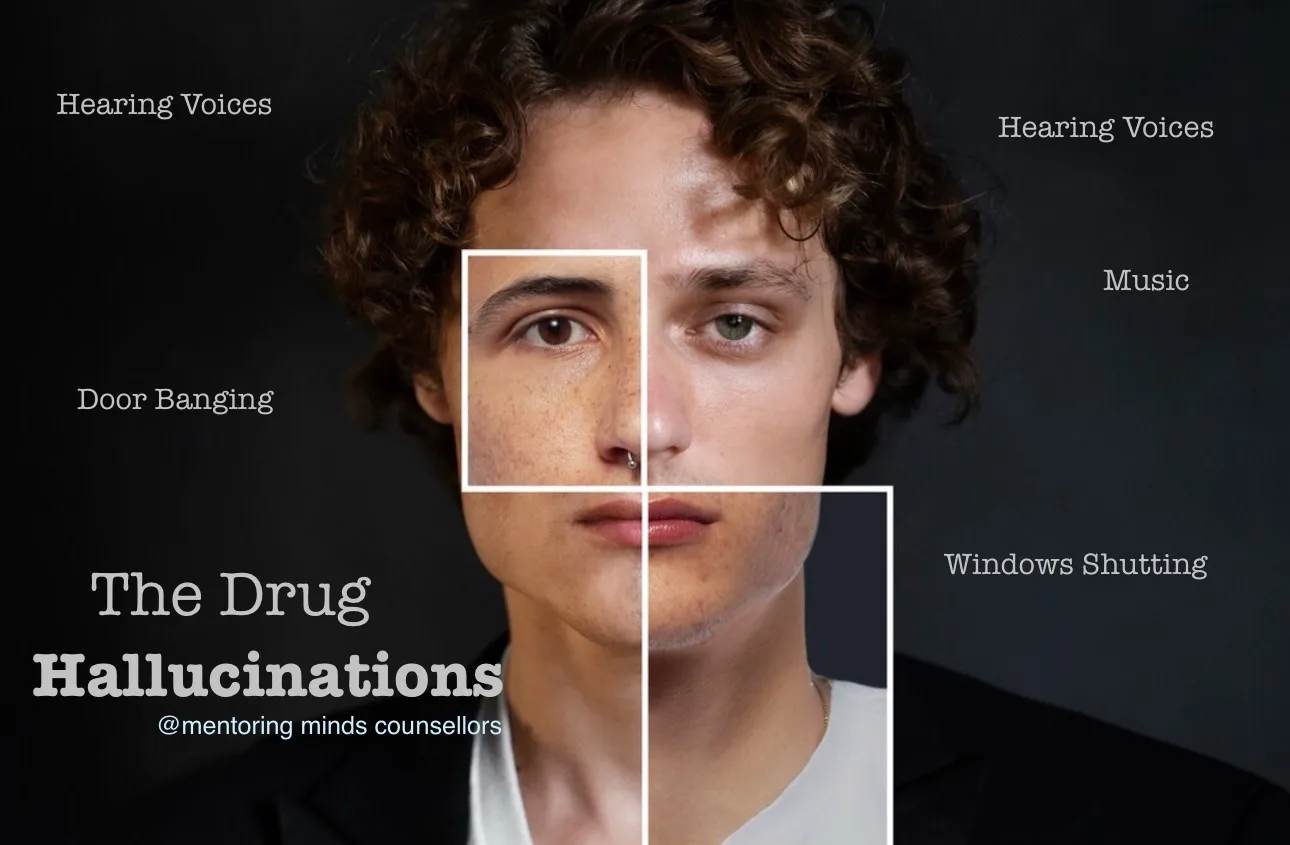
Visual hallucinations is amongst the most striking and disorienting effects of drug use. These experiences vary widely depending on the substance consumed, the individual’s mental state, and the context in which the drug is taken.
1. The LSD Hallucinations
Psychedelic substances like LSD are known for inducing vivid visual hallucinations. Users often report experiencing:
- Intense Colors and Patterns: Bright, pulsating colors and intricate geometric shapes are common, creating a kaleidoscopic effect that can transform ordinary objects into mesmerizing displays.
- Morphing Objects: Everyday items may appear to change shape or move, making the environment feel alive and dynamic.
These hallucinations can evoke a sense of wonder but may also lead to confusion or anxiety, especially in unfamiliar settings.
2. Distorted Perception
Many drugs can cause users to perceive their surroundings in distorted ways. This type of visual hallucination might include:
- Size Distortion: Objects can seem larger or smaller than they are, leading to a disorienting experience.
- Depth Perception Changes: Distortions in depth perception can make it challenging to navigate physical spaces, as distances may appear exaggerated or compressed.
Such distortions are frequently reported with substances like cannabis and certain hallucinogens.
3 The PCP Hallucinations
Substances like PCP (phencyclidine) and certain stimulants can lead to paranoid visual hallucinations, which often include:
- Menacing Figures: Users may see threatening shapes or figures that evoke fear or paranoia.
- Shadowy Movements: Many report seeing shadows or movements out of the corner of their eyes, leading to heightened anxiety and discomfort.
These hallucinations can create a sense of danger, causing users to feel trapped or unsafe.
4. The Visual Blending
Some hallucinogenic experiences blend sensory modalities, leading to a phenomenon known as synesthesia. Users might experience:
- Visualizing Sounds: Certain sounds could be “seen” as colors or shapes, enhancing the overall sensory experience.
- Feeling Colors: Individuals may report feeling colors as tangible sensations on their skin.
- Vivid Imagery: Users may see elaborate scenes or characters, sometimes influenced by their emotional state or environment.
- Rapid Onset: These hallucinations can come on quickly and can be both entertaining and disturbing, depending on the context.
The unpredictable nature of these experiences can lead to anxiety and paranoia, particularly in high doses.
The Impact of Drug-Induced Visual Hallucinations
While some individuals seek out visual hallucinations for their artistic or spiritual insights, these experiences can also have serious consequences. The inability to distinguish between reality and hallucination can lead to dangerous behavior, self-harm, or accidents.
Moreover, prolonged use of hallucinogens can lead to lasting psychological effects, where individuals continue to experience visual disturbances long after the drug’s effects have worn off.
Conclusion
We at Mentoring Minds Counsellors understand thatVisual hallucinations induced by drugs can range from enchanting to terrifying. Understanding these experiences can help users navigate the risks associated with drug use, promoting safer practices and awareness.