
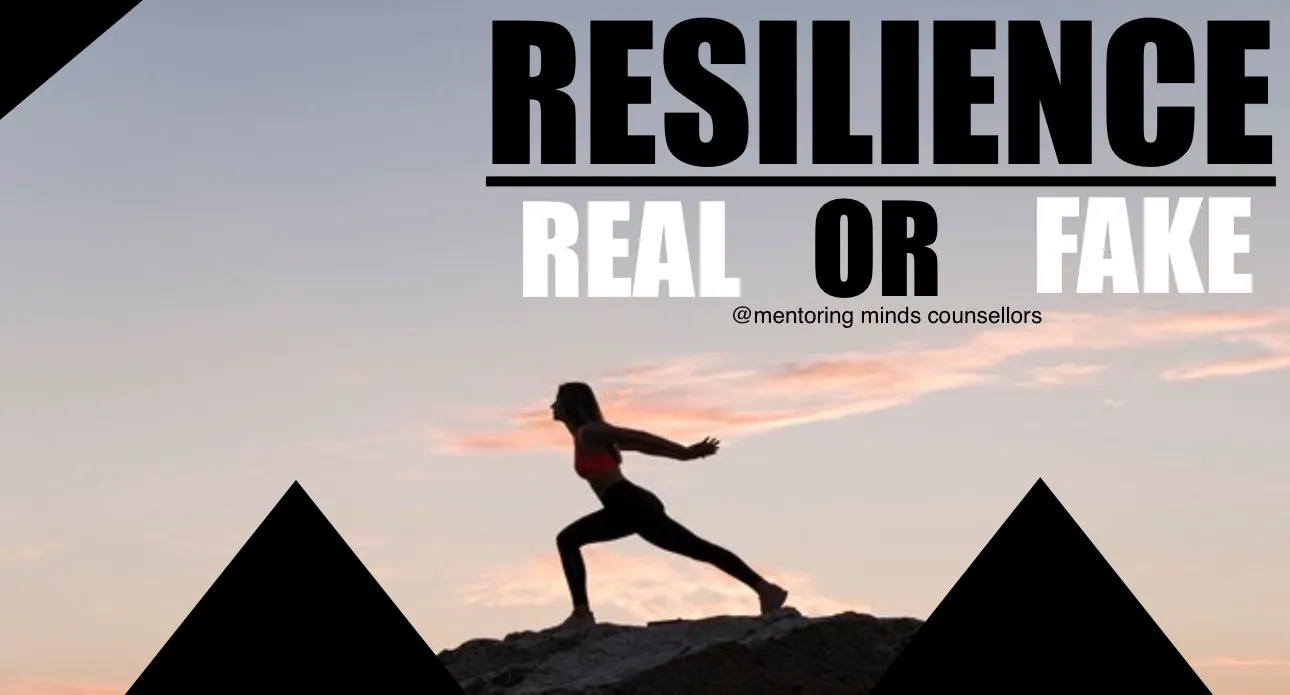
In the age of motivational quotes and “stay strong” captions, the word resilience pops up everywhere. It has almost become a badge of honour something we’re expected to wear proudly no matter what life throws at us.
But here’s the uncomfortable question: Is mental health resilience real, or is it just another feel-good idea that sounds good on paper?
Resilience Is Real; But Not What Social Media Shows You
Resilience is not about being unbreakable, endlessly positive, or magically calm during chaos.
It’s not a filter.
It’s not a motivational poster.
It’s not even a personality trait that some people are born with and others are not.
Real resilience is messy, slow, uneven, and deeply human. It’s the ability to:
- bend without completely collapsing,
- fall apart but still find your way back,
- struggle and still show up tomorrow,
- feel emotions fully but not let them drag you under forever.
Social media shows resilience as strength without struggle. Real life shows resilience as strength because of struggle.
When Resilience Becomes “Fake”
Resilience becomes fake the moment it’s forced.
Fake resilience looks like:
- smiling while you’re drowning,
- pretending to be “okay” to avoid burdening people,
- suppressing emotions in the name of strength,
- romanticising trauma because it created “character,”
- being praised for surviving things you should’ve been protected from.
We glorify the outcome but ignore the cost.
Fake resilience demands perfection.
Real resilience accepts humanity.
The Quiet Truth: Resilience Doesn’t Mean You Don’t Break
People often assume resilient individuals never fall apart. But resilience is not about never breaking; it’s about not staying broken.
Even the strongest person:
- has moments when they’re exhausted,
- cries silently at night,
- questions their worth,
- feels like giving up.
These moments don’t cancel resilience in fact, they prove it. Because resilience is built during the breakdown, not after.
Where Real Resilience Comes From
We don’t find resilience in one moment of inspiration. We build it through repeated experiences of healing, learning, and adapting.
Real resilience grows from:
- supportive relationships
- self-awareness
- healthy emotional expression
- coping tools
- rest and recovery
- boundaries
- processing pain instead of hiding it
- asking for help when everything feels heavy
There’s no shortcut. It’s built slowly, like emotional muscles.
Why Resilience Isn’t the Same for Everyone
Two people can go through the same storm and respond completely differently.
That’s because resilience is shaped by:
- upbringing
- past experiences
- personality
- nervous system sensitivity
- trauma history
- community support
- mental health conditions
So if your resilience doesn’t look like someone else’s, that doesn’t mean you’re weak. It just means you’re human with your own story.
The Hardest Part: You Don’t Feel Resilient When You’re Becoming Resilient
We don’t feel resilient while you’re surviving the tough part. We feel resilient only when you look back and realise what you made it through.
During the storm, resilience feels like:
- exhaustion, not power
- fear, not courage
- confusion, not clarity
- effort, not ease
But afterwards? It reveals itself quietly.
Final Thought: Resilience Is Real But It Must Also Be Gentle
We at Mentoring Minds Counsellors understand that Mental health resilience is absolutely real. But it’s not a trophy, not a performance, and definitely not a demand.
Real resilience honours your emotions.
Fake resilience silences them.
Real resilience grows with support.
Fake resilience grows in isolation.
Real resilience says, “It’s okay to break.”
Fake resilience says, “Don’t you dare.”
So if you’re building resilience right now slowly, clumsily, imperfectly trust me, it’s real.
Leave a Comment